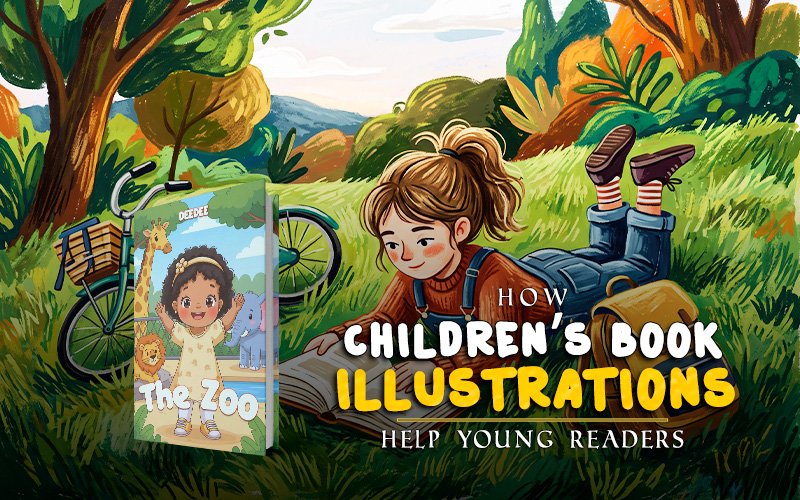
Children’s book illustrations help young readers by showing them what the words mean. A picture of a sleepy bear makes the word “sleepy” stick, and a worried face tells your child how a character feels before they can read a single line. That’s why a good picture can do as much work as a good sentence.
You’ve likely seen this at home. You start reading, and your child stops you on page three because they’ve spotted a snail you never noticed. Annoying? Maybe a little. Useful? Very.
Two Storytellers on Every Page
Every picture book has two people telling the story. The author writes the plot. The artist adds the weather, the mood, and the sneaky background jokes. Say you read “the fox crept through the tall grass,” and the page shows a low orange shape half hidden in green. Your child gets it right away. That’s how illustrations help children with words that are still new to them.
It’s also visual learning at work. Small kids take in color and shape first, and language catches up later. Researchers who study early reading often talk about the benefits of book illustrations for this reason. A picture gives a child something solid to hang a new word on.
Little Clues in the Corners
Artists love hiding things. A mouse by the stove. A dark cloud that shows up three pages before the rain. These story details teach your child to look closely and guess what comes next, which good readers do all the time.
Try stopping before you turn a page and ask, “What do you think happens now?” Most of the time the answer is already in the picture, and your child will be pleased to prove it.
What Your Child Picks Up Without Noticing
The importance of children’s illustrations goes well past looking nice on a shelf. After a few months of regular reading, you may notice changes like these:
- Early literacy skills grow, because your child starts matching printed words with pictures.
- Reading engagement goes up. A book they like looking at is a book they’ll ask for again, and again, and again.
- Story comprehension gets easier, since the art shows who’s there and what’s going on.
- Imagination and creativity get room to stretch, especially in the gaps between pages.
- Shy kids get something simple to point at when they don’t have the words yet.
Think about how illustrations support reading comprehension. A child who can’t read the sentence yet can still tell you the whole story from the pictures. That counts as comprehension, and it matters. Illustrations in children’s books work like training wheels. They keep your child steady while the reading catches up.
Faces Say a Lot
Character expressions matter more than you’d think. Wide eyes, droopy ears, a grin that runs right off the page. Strong children’s book illustrations teach your child to read feelings long before they can read the word “nervous.” Point to a face and ask how that character feels. You’re building empathy and vocabulary in one go.
Reading pictures is its own skill too. Visual literacy for children grows each time you slow down and talk about what you see.
Art Styles You’ll Come Across
Walk down any library aisle and you’ll see how different children’s book illustrations can look from one shelf to the next. A few common looks:
- Watercolor, soft and dreamy, which is lovely for bedtime.
- College, with layered paper that feels handmade.
- Digital art, which tends to be bright and full of detail.
- Pencil and ink. Simple lines and lots of space for your child’s own ideas.
None of them is the best one. What matters is whether the mood fits the story and the page is clear enough for a small child to follow. A crowded scene can overwhelm a toddler. A nearly empty page might bore a five year old.
Picking a Book You’ll Both Like
Choosing illustrated books for kids gets easier once you know what to look for. Flip through a few pages at the shop or library first, and watch your child’s face while you do it. Their reaction tells you a lot.
A Quick Checklist
- Do the pictures match the words?
- Are the faces easy to read?
- Does each page have one main thing to look at? Toddlers love that.
- Does the mood suit the time of day you’ll be reading?
- Can your child choose between two or three books? Choice helps.
Age matters too. Babies go for bold, high contrast shapes. Toddlers like familiar animals and everyday objects. Preschoolers enjoy tiny hidden jokes and busier scenes. When picture book illustrations for children match the stage your child is in, reading feels like play instead of homework.
Many children’s picture books also hold up to repeat reading, since each pass shows you something you missed before. When you’re browsing, keep in mind that children’s book illustrations should leave a few questions open for your child to answer.
If most of your reading happens at bedtime, the guide How to Choose the Best Bedtime Stories for Toddlers covers calm, sleepy picks in more detail.
One Story to Try
If your child likes animals, The Zoo is worth reading together. A zoo is full of things to spot, name, and talk about, so you’ll probably spend a good ten minutes on a single page.
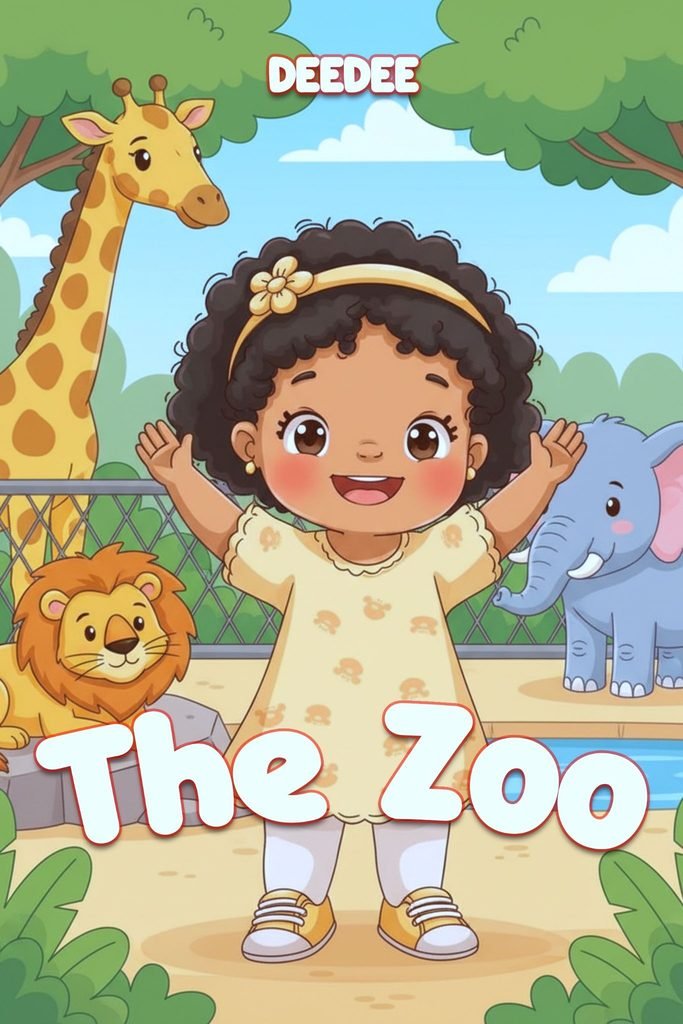
You can find more books made for young readers at Books by Deedee.
The story comes from author Deedee, who keeps the language simple enough to sit nicely beside the pictures.
FAQs
From the very first board books. They stay useful well into early primary school, though the kind of picture your child needs changes. Babies respond to bold shapes. Toddlers want things they recognize. Preschoolers start using the art to guess what happens next.
Yes, completely. Looking closely is part of reading. While your child studies the art, keep reading the words aloud. The two start to connect on their own, and you don’t have to force it.
For very young children, a crowded page can feel like a lot. Choose books with a clear focus on each spread, and give your child time to look. If a page feels busy, ask them to find just one thing, like the smallest animal or the brightest color.